 California Vehicle Code Section 26708 is the law that governs window tinting statewide — and if you drive in San Diego, you need to know what it allows and what it doesn’t. Monumental Workx has been installing window tinting in San Diego since 2004, and tint law questions are among the most common we hear. Here’s the straight answer on window tint laws California 2026: what’s legal, what gets you cited, and how to protect your car without running into trouble.
What California’s Window Tint Law Actually Says
California’s tint regulations break down by window location — not by one blanket rule across your entire vehicle. Your front windows have strict limits. Your rear windows have almost none. Understanding this distinction is the first thing any San Diego driver needs to know about California tint law.
The key metric is Visible Light Transmission, or VLT percentage. VLT measures how much light passes through your window film. A lower VLT equals darker tint. California draws a hard line at 70% VLT for front side windows — stricter than most states. The rear windows operate under a completely different standard. Knowing which rule applies to which glass on your car is what keeps you from getting a fix-it ticket you didn’t expect.
The 70% VLT Rule for Front Side Windows
Your front driver’s window and front passenger window must allow at least 70% of light through. Here’s where San Diego drivers get caught off guard: California law measures the combined VLT of both the glass and the film together. Most factory glass already blocks 20–30% of light on its own. Adding even a light aftermarket film can push your effective VLT well below the legal threshold.
A 70% film layered on factory glass that transmits 75% of light brings your combined transmittance to roughly 52% — technically non-compliant under California tint law. This is the most common mistake we see from DIY installs and discount shops that don’t account for factory glass. For front side windows, a professionally installed, state-compliant film is your only safe option. Monumental Workx uses LLumar FormulaOne and other premium-brand films with clearly labeled VLT ratings so you know exactly what’s going on your car before installation starts.
Get a Free Estimate — our team will confirm which films are legal for your specific vehicle and factory glass before we touch anything.
Front Windshield Tinting Rules in California
Your windshield can only have non-reflective tint applied above the manufacturer’s AS-1 line — typically within the top 4 to 5 inches of the glass. That strip across the top is legal. The rest of your windshield must remain completely clear under front windshield tint California law.
A properly applied visor strip is one of the most practical upgrades for San Diego drivers. Heading west on the 8 toward the coast in the late afternoon, or north on the 5 during morning commute hours, the sun angle hits your windshield at exactly the worst angle. A clean visor strip within the AS-1 line kills that glare without any legal risk. Going below that line is where California draws a firm boundary and officers draw their citation pads.
Back Side Windows and Rear Windshield
California gives you real freedom on the rear glass. Your back side windows and rear windshield can carry any level of tint darkness — including full limo-black — as long as your vehicle has both a driver’s side and passenger’s side exterior mirror. Most vehicles already satisfy that condition, so this rule rarely restricts your options.
This is where San Diego drivers can go as dark as they want without worrying about the law. A deep ceramic tint on rear windows cuts the interior heat buildup that accumulates when you’re parked near Mission Bay or sitting in stop-and-go traffic on the 163 in July. Full UV protection, aggressive heat rejection, and complete privacy for rear passengers are all achievable within legal limits on your back glass.
Reflectivity Rules and Prohibited Tint Colors
California bans metallic or mirrored films on front windows that reflect more light than standard glass does. The concern is driver safety — a chrome-finish front window catches direct sunlight and can blind oncoming traffic. For front windows, non-reflective films are your only compliant option. High-performance non-reflective ceramic films offer superior heat rejection and UV blocking anyway, so this restriction doesn’t cost you anything in terms of performance.
The law also bans specific tint colors outright on all windows. Red and amber films are prohibited statewide. Blue tints draw officer attention even when they fall in a legal gray zone — not worth the risk. Standard charcoal and gray films are the professional choice: legal, clean-looking, and effective across all window positions. If you’ve seen a film you like, check the VLT rating and color compliance before you commit to it.
Medical Exemptions: When You Can Go Darker
California Vehicle Code 26708(b)(4) allows darker tint for drivers with documented medical conditions that require UV protection — conditions like lupus, photosensitivity disorders, or certain post-surgical situations where direct UV exposure poses a genuine health risk. A licensed physician or optometrist must issue a written certification. You carry that document in your vehicle at all times — it doesn’t appear on your registration.
Monumental Workx has installed darker films for San Diego clients with valid medical exemptions on multiple occasions. If this applies to you, bring your physician’s documentation to your appointment and we’ll match you with the appropriate film and keep everything properly documented. The exemption is real and worth pursuing if your condition qualifies — just make sure the paperwork is airtight before you drive with darker front tint.
What Happens If You’re Pulled Over for Illegal Tint
A window tint violation in California is typically classified as a “fix-it” ticket — a Vehicle Code 26708 citation. No points on your license in most cases, and fines are generally modest. But you will need to remove the non-compliant film and have a law enforcement officer sign off on the correction within the required window. That sign-off only happens after compliant tint is installed.
The real cost is in the double expense: paying to remove the illegal film, having the glass properly prepped, and then paying for a compliant install. That’s significantly more than a single professional installation would have cost from the start. We see this regularly — clients who paid a low price for tint at a shop that didn’t measure their factory glass, got cited within weeks, and ended up spending twice the money to fix it. Get the legal window tinting done right the first time.
Frequently Asked Questions About California Window Tint Laws
Is 35% tint legal in California on front windows?
No. California requires front side windows to allow at least 70% VLT. A 35% film allows only 35% of light through the film alone — well below the threshold before factory glass absorption is factored in at all. You can legally run 35% on rear side windows and the rear windshield, as long as your vehicle has both exterior side mirrors.
Does factory glass tint count toward the VLT limit?
Yes. California law measures the combined VLT of both the glass and the film together. If your factory glass transmits 80% of light and you add a 70% VLT film, your combined transmittance drops to approximately 56% — non-compliant for front windows. A qualified installer will measure your factory glass before selecting a compliant film for your specific vehicle.
Can I get legal window tinting on a Tesla in San Diego?
Yes. Tesla’s panoramic glass responds well to premium ceramic films, and many San Diego Tesla owners run compliant films on their front windows while going significantly darker on the rear panels. The team at Monumental Workx is familiar with Tesla’s unique glass specifications across all models and can install high-performance, compliant tint on any Tesla in San Diego.
How do I find out if my current tint is legal in California?
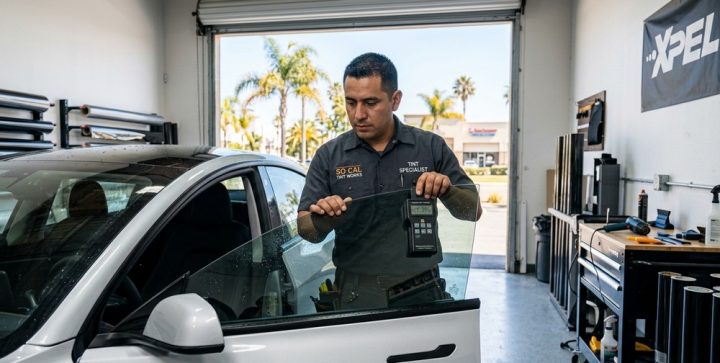
The most reliable method is a professional VLT meter reading. Most reputable tint shops — including Monumental Workx — can measure your existing tint transmittance in minutes. If you bought a car with existing tint and you’re not certain where it stands, bring it in before you get stopped and learn the hard way. We’ve tested plenty of vehicles for clients who just wanted peace of mind.
Ready to Get Started?
If you want San Diego window tinting that’s compliant, high-performing, and built to last in the California climate, Monumental Workx has been doing this since 2004. We’ll confirm what’s legal for your vehicle before we install a single inch of film.
Get a Free Estimate or call us at (858) 291-8200.