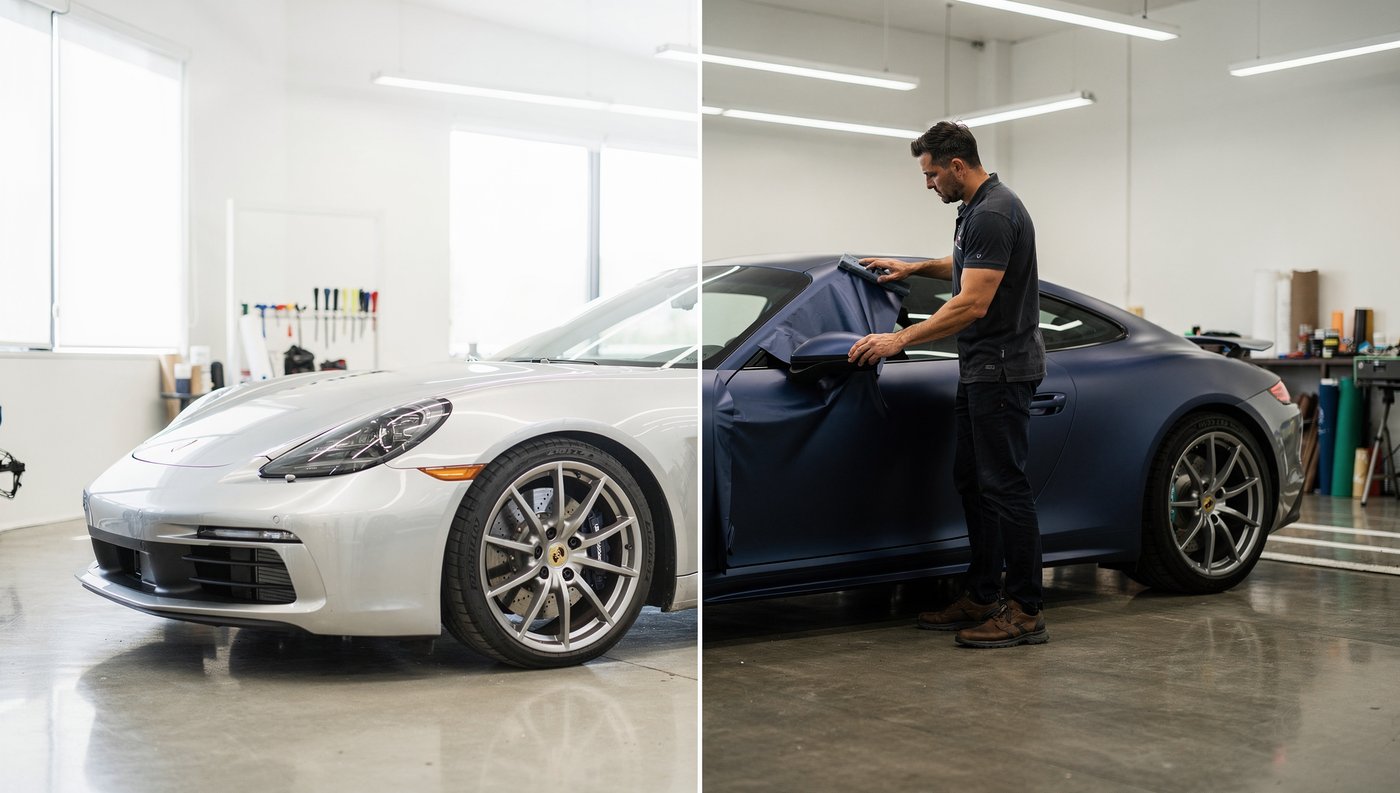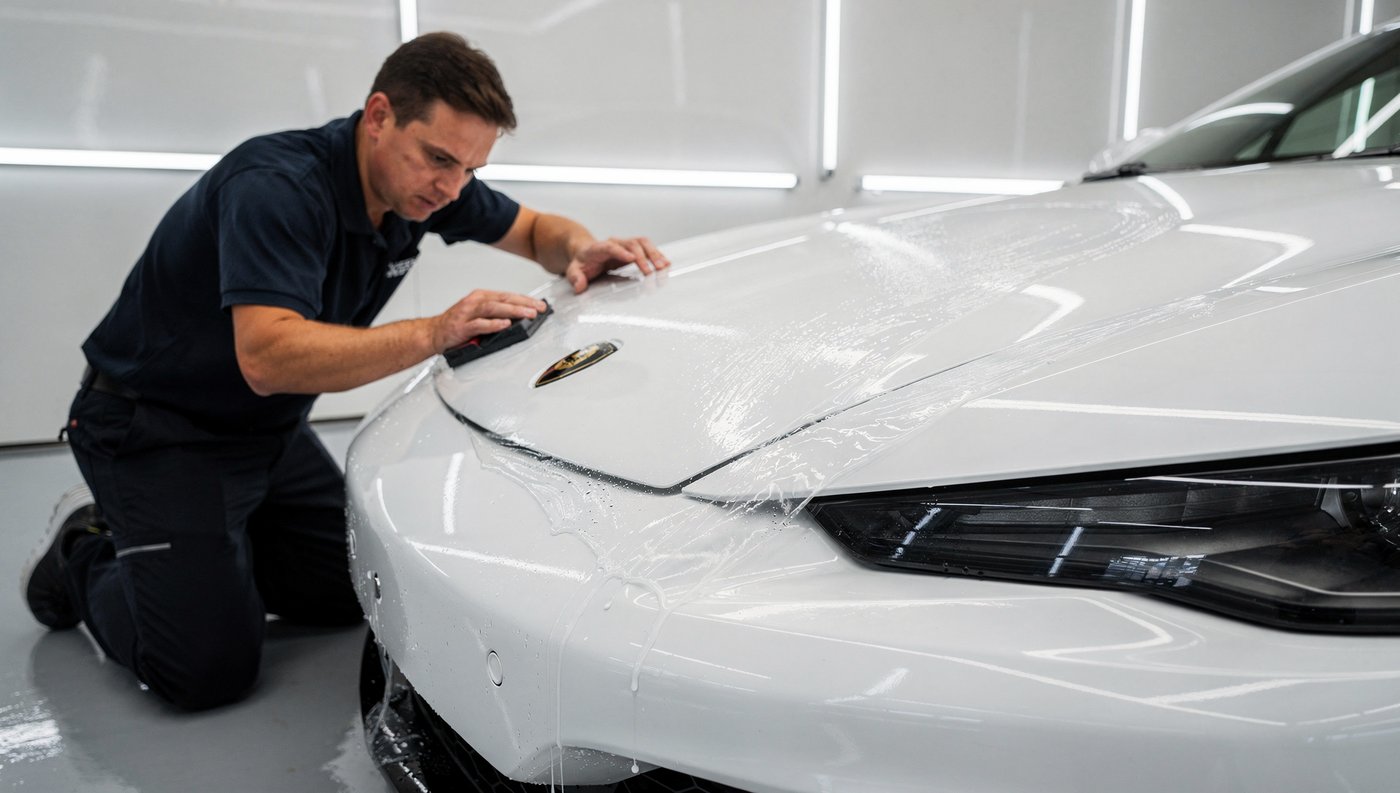
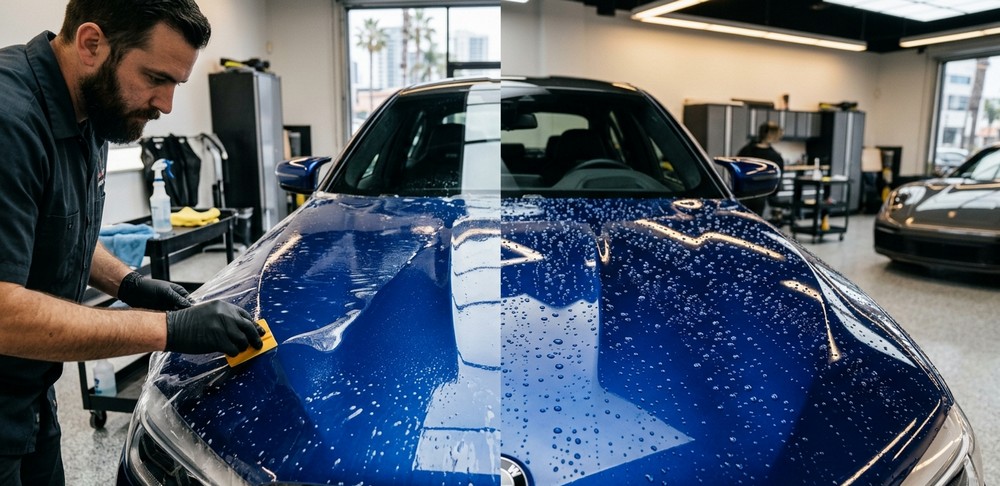
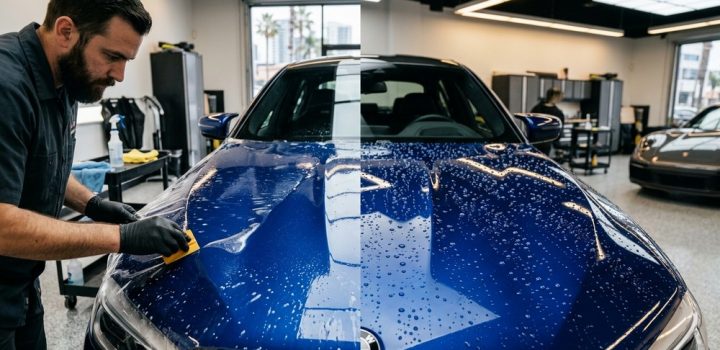
 Two products dominate the paint protection conversation in San Diego right now: paint protection film (PPF) and ceramic coating. They’re often mentioned together, frequently confused for each other, and occasionally sold as interchangeable — they’re not. Monumental Workx has been installing paint protection film and ceramic coatings in San Diego since 2004, and this comparison covers what each product actually does, what it costs, and how to make the right call for your vehicle.
Two Different Products, Two Different Jobs
PPF vs ceramic coating San Diego searches spike after someone gets a rock chip in new paint, or watches a neighbor’s car look flawless two years after a shop visit. Both products protect your car — but they protect against completely different threats. Choosing the wrong one for your situation means paying for protection you don’t need while skipping what you actually do.
Paint protection film is a physical barrier — a thick, clear polyurethane film applied directly over your paint. Ceramic coating is a liquid polymer that bonds chemically to your clear coat and creates a hard, hydrophobic surface layer. One stops rocks. The other repels water, UV, and contamination. They are not the same product, and no marketing framing changes that fundamental difference.
What Paint Protection Film Actually Does
PPF — also called clear bra — is typically 6–8 mil thick, making it substantially more protective than a layer of paint. When road debris or gravel hits your car at highway speed, the film absorbs the impact instead of your paint. Premium brands like XPEL Ultimate Plus and 3M Scotchgard Pro include self-healing top coats: low-speed surface scuffs and light scratches disappear with heat exposure from the sun or warm water.
Paint protection film San Diego drivers need to hear this clearly: PPF is the only product that physically stops rock chips. Nothing else does. Ceramic coating, paint sealant, wax — none of them stop a piece of gravel at 70 mph. If your daily commute covers the 56, the 15, or any freeway stretch through construction zones, PPF on your front-facing panels is the only actual defense for your paint against that specific threat. A front bumper repaint at a San Diego body shop typically runs $500–$900. PPF pays for itself after preventing just a handful of those repairs.
Get a Free Estimate — our Monumental Workx team will assess your vehicle and driving habits, then tell you exactly which product — or combination — makes sense for your situation.
What Ceramic Coating Actually Does
Ceramic coating bonds to your clear coat at a molecular level and creates a glass-hard surface shell. The result is a hydrophobic layer that causes water, mud, bird droppings, and road grime to bead up and roll off instead of soaking in and etching the paint. Your car stays cleaner between washes, cleans faster when you do wash it, and holds its gloss far better than unprotected paint exposed to San Diego’s coastal environment.
What ceramic coating San Diego owners value most is the long-term maintenance advantage. A quality multi-year coating means fewer wash-induced swirl marks, no more waxing, and a finish that resists the dull, oxidized look that year-round UV and ocean salt air produce on bare paint. What ceramic coating cannot do — and this is the critical point — is stop a rock chip. The surface hardness that makes ceramics outstanding at shedding contamination doesn’t flex on impact. That’s not a product flaw; it’s just what ceramic coating is designed and is not designed to do.
Protection Level: PPF vs. Ceramic Coating Head to Head
For physical impact protection, paint protection film wins with no debate. A 7-mil film absorbs the kind of road debris that causes chips worth hundreds of dollars in paint correction. According to professional PPF installers across the industry, front-end PPF packages consistently recover their cost after preventing as few as two or three chip repairs at body shop rates.
For chemical resistance, UV defense, and everyday surface maintenance, ceramic coating holds the edge. A properly cured professional-grade coating resists bird dropping etching, tree sap, and brake dust bonding far better than bare paint. Both products block UV — quality PPF films include UV inhibitors to prevent paint yellowing beneath the film — but ceramic coating’s hydrophobic properties and scratch resistance from routine washing are genuinely superior for long-term appearance and ease of upkeep.
What Each Product Costs in San Diego
Clear bra San Diego pricing depends on coverage area and film tier. A professional front-end PPF package covering the hood, bumper, fenders, and mirrors typically runs $900–$2,500 at a shop like Monumental Workx. Full-vehicle PPF starts around $4,000 and exceeds $8,000 for luxury and exotic vehicles with complex body panels. XPEL and 3M films carry manufacturer warranties up to 10 years when professionally installed by a certified PPF installer in San Diego.
Ceramic coating in San Diego ranges from roughly $700 for entry-level single-layer applications to $2,500 or more for multi-stage paint correction followed by a premium multi-year product. The price gap reflects preparation work, coating tier, and expected durability. A properly applied 5-year coating from a certified installer dramatically outperforms a budget coating applied over contaminated or swirled paint. Cut corners on ceramic prep and you lock those paint defects in permanently under the coating.
Which Product Fits Your Situation?
A few honest questions narrow this down fast. How far do you drive and on what roads? Freeway commuters and anyone regularly taking desert or mountain routes near San Diego should have PPF on at minimum their front-facing panels. Do you want a low-maintenance finish that holds its gloss and cleans easily for years? Ceramic coating is built exactly for that goal.
New car buyers protecting vehicles worth $40K and above get the best return from PPF applied at purchase. Protecting factory paint from day one is the highest-return move in automotive care. Owners focused primarily on easier maintenance and long-term shine — who don’t put significant highway miles on their car — often find ceramic coating alone meets their needs at a more accessible price point. There’s no wrong answer here; it depends entirely on how you use your vehicle.
Can You Use Both? Yes — and It’s the Best Setup Available
The top choice for serious car owners in San Diego is PPF on high-impact zones with ceramic coating applied over the entire vehicle, including directly over the film. This combines the physical impact barrier of PPF where it’s needed most — front bumper, hood leading edge, fenders, A-pillars, side mirrors — with the hydrophobic and gloss benefits of ceramic coating across every panel.
XPEL’s ceramic coating line is specifically engineered to apply over XPEL PPF, and Monumental Workx installs this combination regularly for clients who want complete paint protection San Diego has to offer. The ceramic layer over the film makes it easier to keep clean and keeps the film itself clearer over time by preventing surface contamination from bonding to the polyurethane. It’s not a budget approach — but for a vehicle you genuinely care about, it delivers the best long-term results with the least ongoing maintenance required.
Frequently Asked Questions: PPF vs. Ceramic Coating in San Diego
Does ceramic coating protect against rock chips?
No. Ceramic coating creates surface hardness and chemical resistance, but it does not absorb physical impact. A rock or road debris at highway speed will chip paint right through a ceramic coating. If chip protection is your primary concern, PPF is the only product that solves that problem.
How long does PPF last in San Diego’s climate?
Quality PPF from XPEL Ultimate Plus or 3M Scotchgard Pro carries a 10-year manufacturer warranty when professionally installed. San Diego’s UV exposure is intense year-round, but top-tier PPF films include UV inhibitors that prevent the film from yellowing and protect the paint beneath for the life of the installation.
Should I apply ceramic coating myself to save money?
Consumer ceramic products exist, but professional-grade coatings require full paint decontamination, polishing, and application in a controlled environment. Applying a coating over paint with swirl marks or contamination locks those defects in permanently. The ceramic coating team at Monumental Workx performs paint correction before any coating application so the surface is clean and the coating bonds correctly from the start.
Do I install PPF or ceramic coating first if I’m doing both?
PPF goes on first, always. The film applies directly to the paint surface; ceramic coating goes over everything afterward, including over the film itself. Reversing the order means removing the ceramic layer before PPF can be installed, which wastes money and risks damaging the paint. Any installer suggesting ceramic first when you’re planning to add PPF doesn’t understand the correct installation sequence.
Ready to Get Started?
Whether you need paint protection film, ceramic coating, or both — Monumental Workx has been protecting San Diego vehicles since 2004. Our team will assess your car and give you an honest recommendation before any work begins.
Get a Free Estimate or call us at (858) 291-8200.